
Teaching for How Students Learn: Enhancing our instructional practice
Last week, our staff came together for a powerful professional learning day titled Teaching for How Students Learn, designed to deepen our understanding of how learning occurs in the brain and how we can translate this understanding into the delivery of effective and consistent classroom practice.
Grounded in the latest neuroscience research, the day unpacked the structure and function of the brain, exploring how emotions, social connection and cognition interact to impact learning. The research underpinning the sessions was grounded in the work of Judi Newman’s Social Influence Model, alongside recent releases on best-practice teaching and learning from the Australian Education Research Organisation (AERO).
These insights were directly connected to our school’s instructional model, GANAG, strengthening our collective ability to leverage the strengths of our instructional model to design lessons catered for how students learn best. Sessions on working memory, cognitive load, and neuroplasticity reinforced the importance of explicit teaching. Explicit teaching is an evidence-based approach centred on the idea that teaching has been successful when students have retained what they’ve learned – not when content has been delivered. To maximise learning (i.e. storage in long-term memory), explicit teaching is dynamic and responsive. It involves interacting with students as they practise and adjusting teaching to learning needs as they arise. There are five elements within DET’s definition of explicit teaching (based on research from AERO), as outlined below:
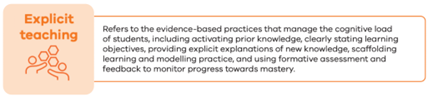
Our focus for this professional learning day was exploring the ‘knowledge and memory’ component to consider how we can provide explicit explanations of New Knowledge (the ‘N’ of within GANAG). Teachers explored key strategies including: breaking down new content into small, manageable chunks; using consistent and clear language; explicitly linking new knowledge to prior learning; checking for understanding regularly; and providing worked examples with step-by-step explanations. Teachers also practised modelling their thinking aloud and using examples and non-examples to clarify concepts and address misconceptions.
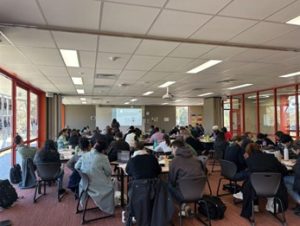
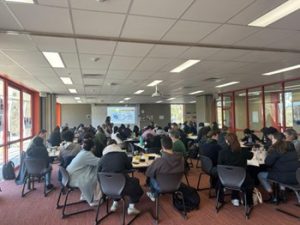

Importantly, the day concluded with protected collaboration time in which staff applied these strategies in subject-based teams, enhancing upcoming lesson sequences to build student knowledge in lasting ways. This work directly supports our School Strategic Plan Goal 1: Maximise the learning and engagement of every student, and specifically Key Improvement Strategy Strengthen a whole school approach to embed high quality teaching and learning to effectively provide for the needs of every student. Our GANAG instructional model acts as a strong base upon which we can build to continually improve teaching and learning at AHS. Other elements of explicit teaching will be explored in future professional learning sessions as our work in the instructional practice space evolves. I thank all staff involved for their enthusiasm and active participation on the day; they truly embodied what it means to be a lifelong learner.
Samantha Francis,
Learning Specialist: Instructional Practice & Staff Development